Spacecraft Thermal Control
Practical thermal control training built on real flight experience and real case studies
30+ space missions of hard-won knowledge in 12 hours.
Most thermal control courses teach you theory you can find online or in the Gilmore's Handbook. This one teaches you what happens between the theory and flight sign-off.
Built on 15+ years of hands-on work across 30+ space missions, this course covers the practical workflow that no textbook or university covers: how to build a model that correlates, how to quickly convince your managers with compelling results and visuals, how to write an analysis report that passes CDR review, and how to avoid the mistakes that cost projects months of rework.
First developed in 2011 and continuously refined ever since, this course has been used as a reference by peers, worldwide instructors, and students/engineers across the space industry.
“After this course, you will be able to set up, run, and defend a complete thermal analysis campaign for a flight instrument — with the confidence and methodology that normally takes years of on-the-job experience to develop.”
Includes hands-on applied projects: a CubeSat in Sun-Synchronous Orbit and a rover on the Moon.
What You'll Learn
Thermal Fundamentals
Space thermal environment, heat transfer modes, orbital thermal loads. The physics you actually need, explained with real mission context
Thermal Control Hardware
MLI, radiators, control heater loops, heat pipes, fluid loops, variable conductance heat pipes, phase change materials, thermal straps, coatings. How to select, size, and justify your design choices for a flight-ready system
Thermal Analysis Methods
Worst case approaches, sensitivity, uncertainty analysis, quick model simulation mapping. Quick hand calculations for sanity checks. Learn the methods that let you sanity-check any software output and catch errors before review
Thermal Modelling Philosophy
Best practices for building, structuring, and validating thermal models. Applicable to any thermal analysis software, from geometry to post-processing
Radiative Analysis & Environment
Radiative environment modelling, view factors, IR/solar fluxes. How to handle the environments that drive your design, including LEO, VLEO, and lunar
Verification & Testing
TVAC test planning, thermal balance, cycling, and correlation methodology. Real insights from campaigns spanning cryogenics to 200°C+
Applied Project: CubeSat in SSO
End-to-end thermal design of a CubeSat in Sun-Synchronous Orbit. From requirements and environment definition through analysis, sizing, and design justification
Applied Project: Rover on the Moon
Thermal design for a lunar rover facing extreme surface temperatures, dust, and long lunar nights. A uniquely challenging environment rarely covered in courses
Course Format
- 12 hours of content
- 8 modules including 2 applied projects
- Self-paced video format
- Lifetime access
- Certificate of completion
A Format for Every Team & Budget
Whether you're an individual engineer, a company team, or a university program, we have a training format that fits.
Corporate Training
Live training for teams of 5+, delivered online or as a 2–3 day custom workshop at your facility. Content can be tailored to your missions, tools, and workflows.
- ✓Live sessions with Q&A — online or onsite
- ✓Custom modules for your hardware & environments
- ✓ Team discounts for 5+ seats
Student & Early Career
On-demand recorded version at a reduced rate. Ideal for MSc students and junior engineers entering the field.
- ✓ Self-paced recorded format
- ✓ Reduced pricing for students
University License
Annual site license for MSc programs wanting to supplement their thermal control curriculum with real-world mission content.
- ✓ Annual license for unlimited students
- ✓ Complements existing curriculum
All pricing available on request. Click any option above to express interest.
Need to onboard new hires fast? Quick onboarding packages can be customised for rapid employee ramp-up.
Learn from Real Mission Experience
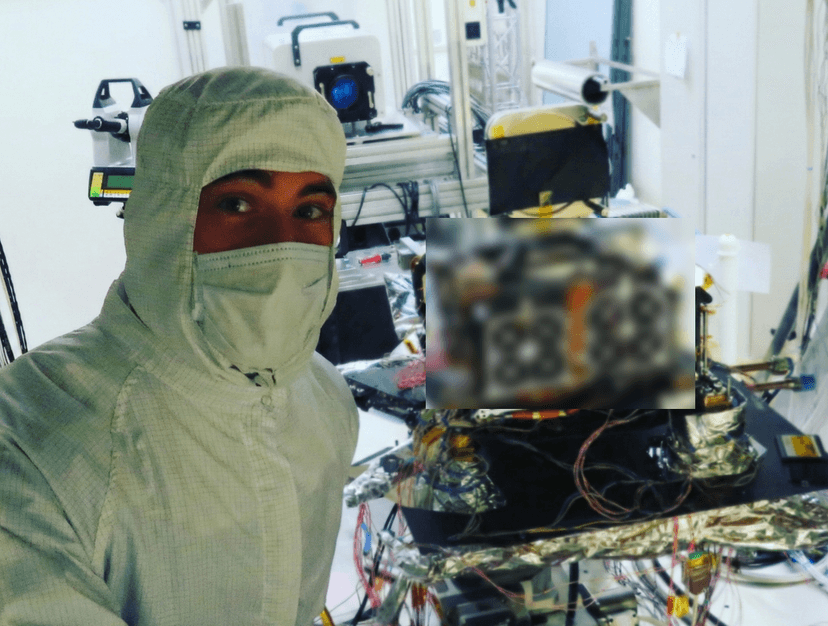
Taught by an engineer with 15+ years of spacecraft thermal engineering across international missions, agencies, primes, and research institutes. Teaching and developing course material since 2011, used as reference by peers, instructors, and engineers worldwide — from cryogenic detector assemblies to instruments facing the Sun at 0.28 AU, the lessons come from missions that are flying right now.
30+ Flight Missions
Thermal design contributions across 30+ international missions spanning scientific instruments, Earth observation, and space exploration. Most are flying now.
TVAC Campaigns & Test Expertise
Managed and conducted thermal balance and cycling campaigns from cryogenic temperatures down to 49 K up to 200°C+, including facility design and correlation.
Teaching Since 2011
Course material developed since 2011, used as reference by peers, worldwide instructors, and engineers. 100+ students and engineers trained through lectures. 40+ master thesis and internship students supervised, many of whom went on to careers in the space industry. Guest lecturer at UPC Barcelona and ULiège.
Cryogenics to High Temperature
From cryogenic detector cooling on PLATO and cryogenic heat switches for ESA, to high-flux solar environments on Solar Orbiter at 0.28 AU.
Knowledge of Specific Environments
Lunar thermal challenges including extreme surface temperature swings, regolith interaction, and lunar night survival. Very Low Earth Orbit (<300 km) with atomic oxygen degradation, high drag, and unique thermal control requirements.
Agency & Industry Breadth
Work across international projects for space agencies, primes, SMEs, research institutes and startups.
 © TESSA Labs